 Sidney Alfred Parsons and his Ancestors
The Owslebury Lads
This folk song, "The Owslebury Lads", celebrating the 1830 riot in Owslebury, was collected by George Gardiner in 1906 from the singing of James Stagg in Winchester. Gardiner’s version recorded the year as eighteen hundred and thirteen — he must have mis-heard the singer. The version below has been corrected.
On the thirteeth of November, eighteen hundred and thirty
Our Owslebury lads they did prepare all for the machinery,
And when they did get there, my eye! how they let fly;
The machinery fell to pieces in the twinkling of an eye.
CHORUS: The mob, such a mob, you have never seen before,
And if we live this hundred years, you never will no more.
Oh then to Winchester we was sent, our trial for to take,
And if we having nothing to say, our counsel we shall keep;
And when the Judge he did begin, I'm sorry for to say,
So many there was transported for life, and some was cast to die.
CHORUS
At six o'clock in the morning, our turnkey he comes in,
With a bunch of keys all in his hand tied up all in a string,
And when we can't get further than back across the yard,
With a pound and a half of bread a day, now don't you think that hard?
CHORUS
At six o'clock in the evening, the turnkey he comes round,
The locks and bolts do rattle like the sounding of a drum,
And we are all locked up again all in our cells so high,
And there we stay till morning, whether we live of die.
CHORUS
Now to conclude and finish my new song,
You gentleman all around me, you think that I'm not wrong
And all the poor in Hampshire, for rising of their wages
I hope that all their enemies, may live to want for places.
CHORUS
The tune, noted by Gardiner's friend, the equally well known folk song collector, Henry Hammond, is below:
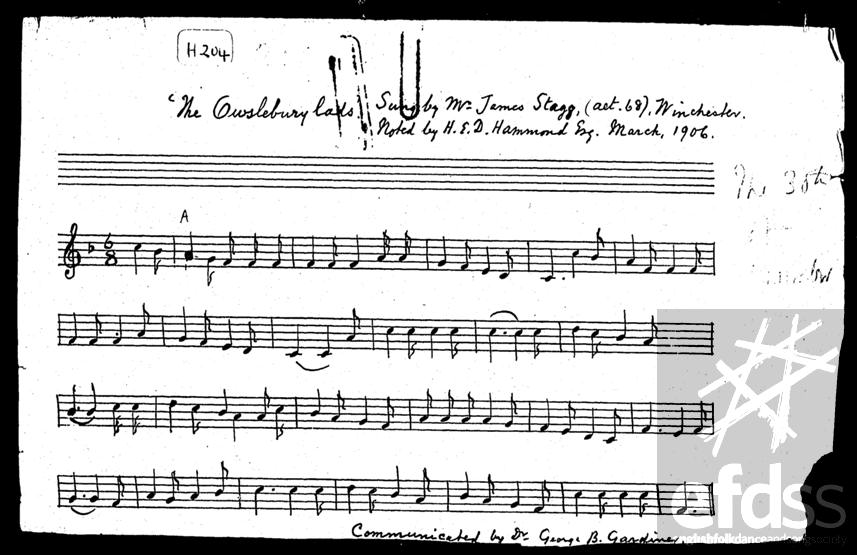
This song can be found in the library of the English Folk Dance and Song Society at Cecil Sharp House in London.
You are free to make use of the information in these web pages in any way that you wish but please be aware that the author, Mike Parsons, is unable to accept respsonsibility for any errors or omissions.
Mike can be contacted at parsonspublic@gmail.com
Copyright © 2012 Mike Parsons. All rights reserved.